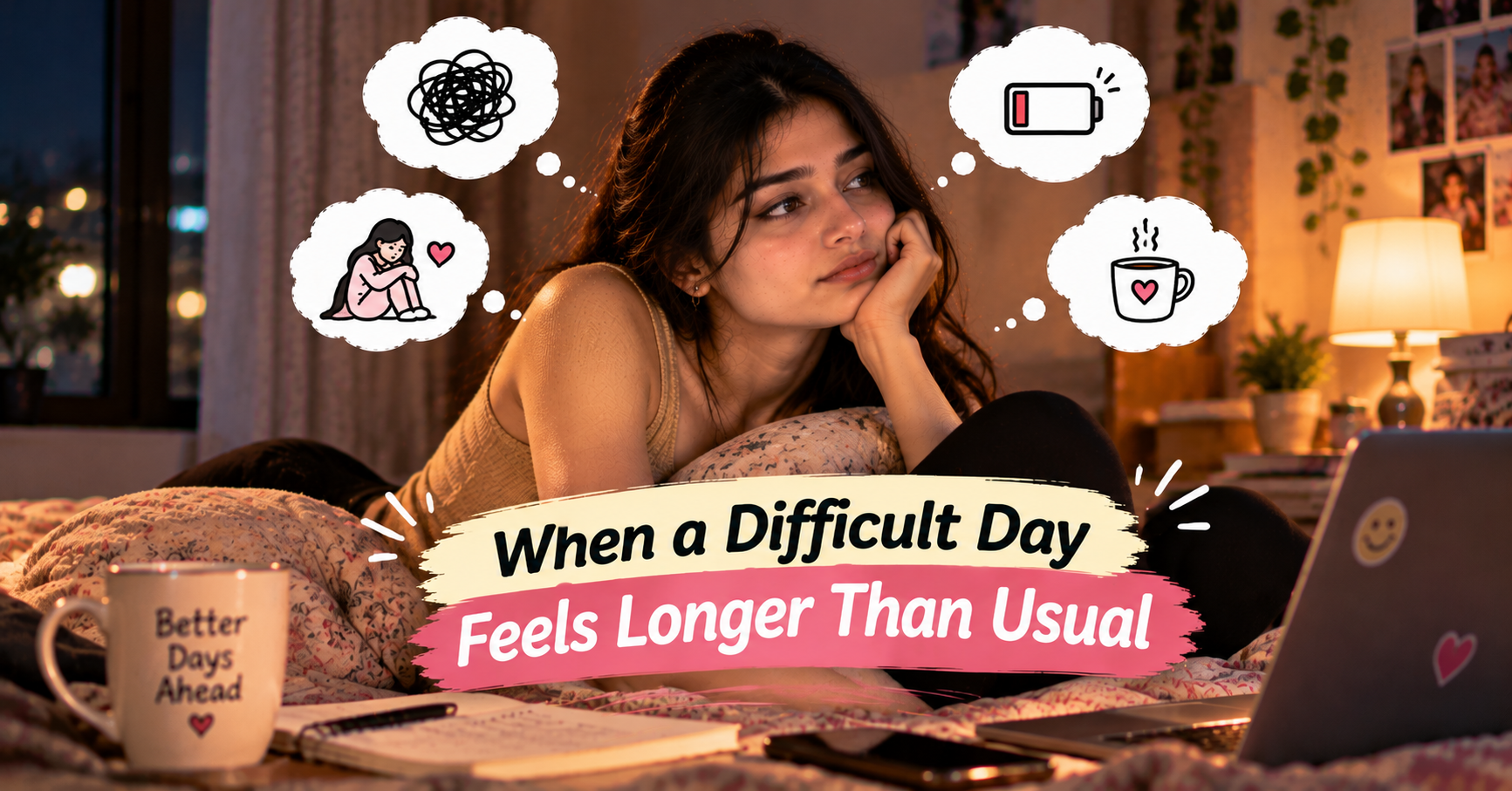
Have you ever reached the end of a day and thought, “Yaar, nothing major even happened, so why am I this tired?” You went to work or college, answered messages, travelled through traffic, did the things people expected from you—and still came home feeling unusually low. There may not have been one big argument or one obvious problem. It was just a collection of small things, and by evening, even deciding what to eat felt like too much effort.
That kind of day can be confusing because it does not always come with a clear explanation. You might feel irritated with people you normally like, keep scrolling without enjoying anything, or want company while also not having the energy to explain yourself. Sometimes the day feels long because you have been carrying more than you noticed. Sometimes you are physically tired, worried about something in the background, or simply overdue for a proper pause.
You do not have to turn every difficult day into a lesson or a self-improvement project. The first useful step is often much smaller: stop judging yourself for feeling the way you do and work out what might make the next hour a little easier.
Why an ordinary day can feel unusually heavy
Most people think stress comes from big events: exams, deadlines, money problems, a breakup or a difficult conversation. But daily pressure can build through little interruptions too. A commute that takes longer than expected, a message you do not know how to answer, a task that keeps getting postponed, a family call that leaves you feeling guilty, or the effort of acting cheerful when you are not in the mood can all take energy.
There is also the pressure to be constantly available. Work messages arrive after office hours, college groups stay active late into the night, and social media makes it look as though everyone else is doing something exciting. You may compare your ordinary Tuesday with someone else’s best photographs. Even when you know that online life is selective, the comparison can still affect your mood.
Sometimes you are not upset about one thing; you are tired of having to manage everything at once. And sometimes there is a real concern you have not given yourself time to acknowledge. Neither situation means you are weak or ungrateful. It means you are human, and your attention and energy have limits.
Start by naming what kind of tired you are
Instead of asking yourself, “What is wrong with me?”, try asking a more useful question: “What kind of tired am I?” You might be physically exhausted, socially drained, mentally overloaded, disappointed, lonely, or worried about tomorrow. More than one answer can be true.
If you are physically tired, a meal, water, a shower or an earlier night may help more than another hour of scrolling. If you are mentally overloaded, write down the tasks circling in your head and choose just one that genuinely needs attention today. If you feel lonely, a short call or a low-pressure plan with someone may help. If you are disappointed, you may need space to acknowledge that rather than immediately trying to fix it.
You do not have to solve the entire cause before you take care of yourself. Sometimes the cause becomes easier to understand after you have eaten, rested or spoken honestly with someone.
Make the next hour simpler
When your energy is low, complicated plans can become another source of pressure. Choose a small reset that does not require you to become a different person by tonight.
- Change your physical setting. Open a window, take a shower, sit on the balcony or walk around the block if it is safe and comfortable.
- Eat something manageable. You do not need a perfect meal. Choose something simple and drink some water.
- Reduce one source of noise. Put a work chat on mute for a while, step away from a stressful feed or stop checking a conversation that is making you anxious.
- Make a short list. Write down what must happen today and what can wait. Give yourself permission to leave non-urgent things for tomorrow.
- Choose one ordinary comfort. Put on familiar music, watch an episode of something light, read a few pages or make tea without doing three other things at the same time.
These are not magic fixes. They are small ways of making the evening less demanding. If one does not help, that is okay; try another or simply rest.
When talking helps—and when you do not want to explain everything
Sometimes the most tiring part of a difficult day is feeling that you have to package your emotions neatly before you can share them. You may avoid calling a friend because you do not want to sound negative, or you may be tired of hearing advice before you have finished describing the problem.
You can make a more specific request. Try saying, “I’ve had a long day. Can I talk for a few minutes? I don’t need solutions right now.” Or, “I don’t really want to discuss work. Can we talk about something completely different?” People are not mind readers, and giving them a little direction can make a conversation more comfortable.
If you do not feel ready to talk about the reason, you can still ask for company. A walk, a meal, a film or sitting with someone while you both do your own thing can be enough. Connection does not always require a deep conversation or a complete explanation.
Choosing calm company instead of more pressure
There are evenings when being alone feels restorative. There are other evenings when you would rather not spend another hour in the same room with the same thoughts. Neither preference is wrong. The useful question is whether the plan you choose fits your energy and your actual needs.
You might message a friend, meet a cousin for chai, join a group activity, attend a class, or take yourself to a familiar café. If your usual circle is busy and you are an adult who wants a planned social outing, a professional companion service may be another option to consider. Depending on the provider’s actual terms, that could mean meeting for coffee, having a meal, attending an event or spending an agreed amount of time in conversation.
A companion is not there to diagnose your mood, guarantee that you will feel better or take responsibility for your personal problems. Think of it as a defined social arrangement that may suit a particular evening—not a replacement for friends, family, counselling or your own judgement. You should be able to understand the service, cost, duration and boundaries before making a decision.
If you are considering a male companion in Delhi, review the service details and confirm current availability, total price, meeting arrangements and cancellation terms directly. Choose an activity you genuinely want to do, not one you feel pressured to book because you are having a difficult day. A public place is a sensible choice for a first meeting, and it is wise to tell someone you trust where you will be.
What if difficult days are becoming the norm?
One heavy day is part of life. If you regularly feel overwhelmed, struggle to sleep, lose interest in things you usually enjoy or find it hard to manage ordinary responsibilities, take that pattern seriously without blaming yourself. Consider speaking with a qualified mental-health professional or healthcare provider. Support is not only for emergencies, and you do not need to wait until things become unbearable.
It can also help to look at the practical pressures around you. Are you getting enough rest? Is your schedule unrealistic? Is there a relationship or responsibility that repeatedly leaves you drained? Is there one boundary you could set, one task you could ask for help with, or one conversation you have been avoiding? You do not have to change everything at once. Pick one manageable adjustment.
A gentler way to end the day
You do not need to make a difficult day productive. You do not need to post a quote about resilience or prove that you can handle everything alone. You can admit that today was a lot, do the basics, and let tomorrow be a separate day.
Maybe the next step is a warm meal, a short walk, a message to someone safe or an early night. Maybe you need a little company; maybe you need quiet. Pay attention to what feels supportive rather than what looks impressive from the outside.
And if you cannot explain why the day feels heavy, you can still treat yourself with care. You are allowed to have a low-energy evening without turning it into a judgement about your entire life. Sometimes the most useful thing you can do is make the next hour a little kinder than the last one.
Frequently Asked Questions
Why do I feel exhausted after an ordinary day?
Small pressures, poor sleep, constant notifications, social demands and worries in the background can build up even when no single major event occurs. Notice whether you need rest, practical help, connection or time to process something.
What can I do when I feel low but do not know why?
Start with basic needs: water, food, a little movement, rest and a quieter environment. Write down what is on your mind or speak with someone you trust without forcing yourself to find a perfect explanation.
Can companionship help after a difficult day?
Planned company for a conversation, meal or public outing may suit some adults. It is one option, not a guaranteed mood fix or a substitute for trusted relationships and professional support when needed.
When should I seek professional help?
If low mood or stress persists, affects daily functioning or feels unmanageable, consider speaking with a qualified professional. Seek urgent local help if you feel unable to keep yourself safe.