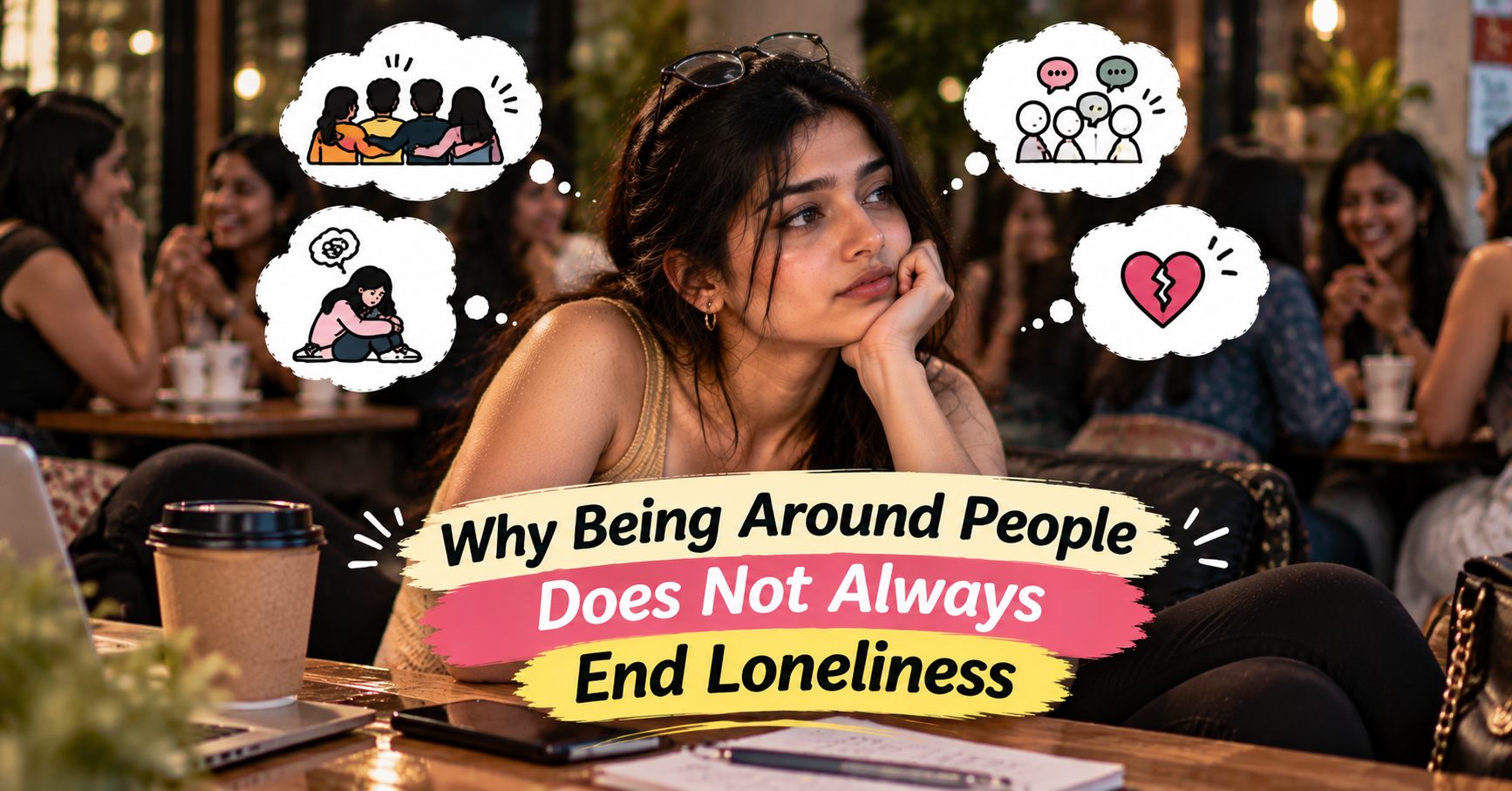
Delhi is rarely short of people. The metro is busy, cafés are full, college corridors are loud, and someone is always talking in the office group chat. You can spend an entire day surrounded by voices and still reach home feeling as though you did not really connect with anyone.
Maybe you laughed with colleagues but avoided mentioning what has been bothering you. Maybe you sat with friends who spent most of the evening looking at their phones. Maybe you have plenty of contacts but no one you feel comfortable calling when you are having a rough night. From the outside, your life may look social. Inside, it can still feel strangely empty.
This can be hard to admit because loneliness is often imagined as a person sitting completely alone. In real life, loneliness is not only about how many people are nearby. It can also be about whether you feel noticed, understood, included or able to be yourself around them.
Company and connection are not exactly the same
Company means other people are present. Connection is the feeling that some part of the interaction is genuine and mutual. You can have company at a crowded party and still feel disconnected. You can also feel deeply connected during a ten-minute conversation with someone who listens without rushing you.
This does not mean every interaction has to be meaningful. Small talk, jokes and casual plans are valuable too; they help daily life feel lighter. But if most of your interactions stay at the level of “How are you?” “All good” and “What’s the plan?”, you may begin to miss conversations where you can say what you actually mean.
Sometimes we contribute to the distance without intending to. We say we are fine because we do not want to burden anyone. We wait for someone else to notice that we are quiet. We cancel plans because we are tired, then feel hurt that nobody checked again. These responses are understandable, especially if opening up has not felt safe before, but they can make it harder for others to know how to reach us.
Why loneliness can show up in a busy life
1. You are performing a version of yourself
At work, you may be the reliable person who always has an answer. At college, you may be the funny friend who keeps everyone entertained. At home, you may be the one who says everything is under control. Those roles can be useful, but they can become tiring if you feel you are never allowed to be uncertain, sad or quiet.
When people know only the version of you that is coping, they may not realise when you need support. You do not have to share your private life with everyone. Try choosing one trustworthy person and being a little more honest than usual: “Actually, I’ve been feeling disconnected lately.” You can start with a small truth rather than your whole story.
2. Your social time is mostly digital
Messaging and social media make it easy to stay in touch, but they can also create the feeling that you are connected to everyone and close to nobody. A reaction or a quick reply can be pleasant, yet it may not meet the need for an unhurried conversation. Watching other people’s plans online can add another layer of comparison: everyone seems included except you.
You do not have to delete your apps or become anti-social online. Try adding one small offline interaction to your week. Have chai with a friend, walk with a colleague after work, attend a hobby group or call someone without multitasking. The aim is not to make every meeting profound. It is to give connection a little more room.
3. Your friendships have changed
People move cities, start jobs, enter relationships, prepare for exams or take on family responsibilities. A friendship that once involved spontaneous daily plans may become a message every few weeks. That shift can hurt even when nobody has done anything wrong.
Instead of assuming the friendship no longer matters, try suggesting something specific and realistic: “Are you free for coffee on Sunday afternoon?” A clear plan is easier to answer than “We should meet sometime.” At the same time, notice whether effort is mutual over time. You can value an old friendship without carrying the entire relationship alone.
4. You do not feel safe being honest
If previous conversations led to gossip, criticism or unwanted advice, you may have learned to keep things to yourself. It makes sense to be careful about whom you trust. The answer is not to tell everyone everything; it is to look for people who respect privacy, listen, and do not use your vulnerability against you.
Trust is built gradually. Share a small concern and notice how the person responds. Do they listen? Do they ask what you need? Can they disagree without humiliating you? Those small signals can help you decide whether to share more over time.
How to feel more connected without forcing yourself to become outgoing
You do not need to become the most social person in the room. Some people enjoy large groups; others prefer one-to-one conversations or quiet activities. The goal is not to copy someone else’s personality. It is to find a pattern of contact that feels meaningful and sustainable for you.
- Make one specific invitation. Suggest a walk, coffee, lunch or a short call rather than waiting for a perfect plan to appear.
- Ask one question you genuinely care about. Move beyond routine updates without turning the conversation into an interview.
- Tell someone what kind of support would help. You can say whether you want advice, distraction, practical help or simply someone to listen.
- Return to a shared activity. A class, sport, book group, volunteering activity or regular café visit creates natural opportunities to see familiar faces.
- Notice reciprocity. Healthy connection involves both people making some effort. You do not have to chase every relationship endlessly.
- Let ordinary moments count. A friendly chat with a neighbour or a familiar face at a hobby group may not solve loneliness, but it can make daily life feel less isolated.
What if you want company but do not want to explain everything?
Not every lonely moment calls for a deep emotional conversation. Sometimes you want to get out of the house, share a meal, watch a film or walk around a familiar area without having to explain what has been going on in your head. It is okay to want that kind of ordinary social time.
You might ask a friend to join you for coffee, call a family member, visit a community event or plan an activity around an interest. If the people you know are unavailable, and you are an adult looking for a defined social outing, a professional companion service may be another option. Depending on the provider’s terms, the arrangement may include conversation over a meal, attending an event or spending an agreed amount of time together in a public setting.
It is important to keep expectations clear. A paid companion is not automatically a close friend, romantic partner or mental-health professional. The service cannot promise that loneliness will disappear. It may provide planned company for a particular activity, but longer-term connection usually grows through ongoing mutual relationships, communities and support that fit your life.
If you consider a male companion service in Delhi, review the provider’s actual information and confirm the activity, availability, total price, duration and boundaries before booking. Choose an outing because it sounds comfortable to you, not because you feel there is something wrong with being alone. For a first meeting, a public place is a sensible option; tell someone you trust your plan and arrange your own transport.
Being alone is not always the problem
There is a difference between choosing solitude and feeling isolated. A quiet evening can be restorative when it is your choice. You may enjoy reading, cooking, watching a film or taking a walk alone. The problem is not that you spend time by yourself; it is when you feel disconnected in a way that hurts and you cannot find a path back to people or activities that matter to you.
Try not to judge yourself for needing people. Human beings vary in how much social time they enjoy, but most of us need some form of connection. Wanting someone to listen, share a meal or remember to check in does not make you needy. It makes you a person with ordinary social needs.
When loneliness deserves extra support
If loneliness has become persistent, is affecting your sleep or daily routine, or comes with ongoing hopelessness, consider talking to a qualified mental-health professional. You do not need to wait for a crisis to ask for help. A professional can help you understand patterns, practise ways of connecting and work through experiences that make trust difficult.
If you feel unable to keep yourself safe, seek urgent local support and contact someone you trust who can be with you. You deserve care that matches what you are going through.
A small, honest next step
Think about the last time you felt genuinely connected. Was it a conversation where you did not have to pretend? A shared joke? Someone remembering a detail you mentioned? A meal where nobody rushed you? You may not be able to recreate that moment exactly, but it can tell you something about what you value.
Choose one small step this week: invite someone for a short walk, call a friend and ask for ten minutes of listening, return to a hobby, or explore a social activity that interests you. If a planned companion outing is something you genuinely want and can comfortably afford, consider it with clear expectations and boundaries. You do not need to choose only one kind of connection.
You can be surrounded by people and still feel lonely. You can also start changing that feeling through small, repeated experiences of being seen and included. It does not have to happen all at once. Start with one conversation, one invitation or one honest sentence.
Frequently Asked Questions
Why do I feel lonely even when I have friends?
Friendship and connection are related, but they are not identical. You may have friends and still feel that you cannot be fully honest, that your routines no longer match, or that your conversations lack the attention you need. Consider sharing a small truth with someone you trust.
Can social media make loneliness worse?
It can for some people, especially when scrolling leads to comparison or replaces the kind of interaction they want. Notice how you feel after using it and try balancing online contact with direct conversations and shared activities.
Does a companion service solve loneliness?
No service can guarantee that loneliness will disappear. A defined companion booking may offer company for an agreed outing, but it is not a substitute for mutual friendships, community or professional support when needed.
How can I meet people without feeling awkward?
Start with a shared activity where conversation has a natural focus, such as a class, hobby group, sports session or volunteering. Small, repeated interactions can feel easier than trying to make an instant close friend.